
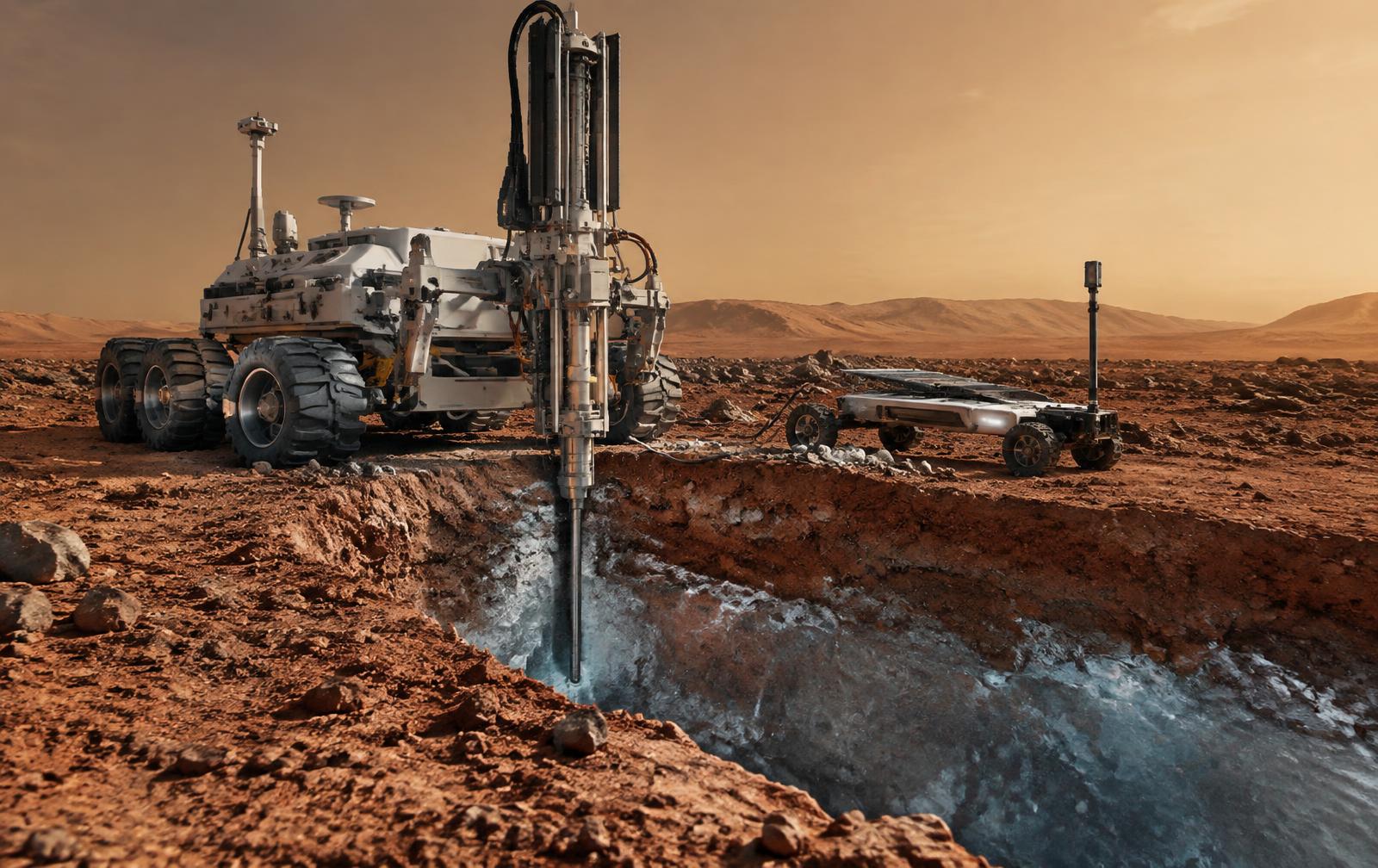
What lies beneath the surface is what makes a sustained Mars presence possible: water ice, buildable regolith and shielding material. MARSBOTS drills, excavates and processes subsurface material so habitats and future crews do not have to bring everything from Earth.
Drilling and excavation
Autonomous drill rigs and excavators core, cut and clear regolith and ice-bearing ground, adapting drilling parameters in real time as subsurface material changes.
Detect
Ground-penetrating radar and drill telemetry map subsurface ice deposits, void spaces and material composition before excavation begins, reducing wasted effort on the wrong site.
Build
ISRU units convert extracted water ice into drinking water and propellant-grade oxygen and hydrogen, and process regolith into radiation-shielding blocks and construction feedstock.
Sample handling
Extracted cores and samples are logged, sealed and analysed on site, with results feeding directly into where the next excavation or drilling site is chosen.
Ahead of crew arrival
Subsurface work is scheduled to run years before any crew lands, so water, oxygen and shielding material are already stockpiled when the first crewed mission arrives.