
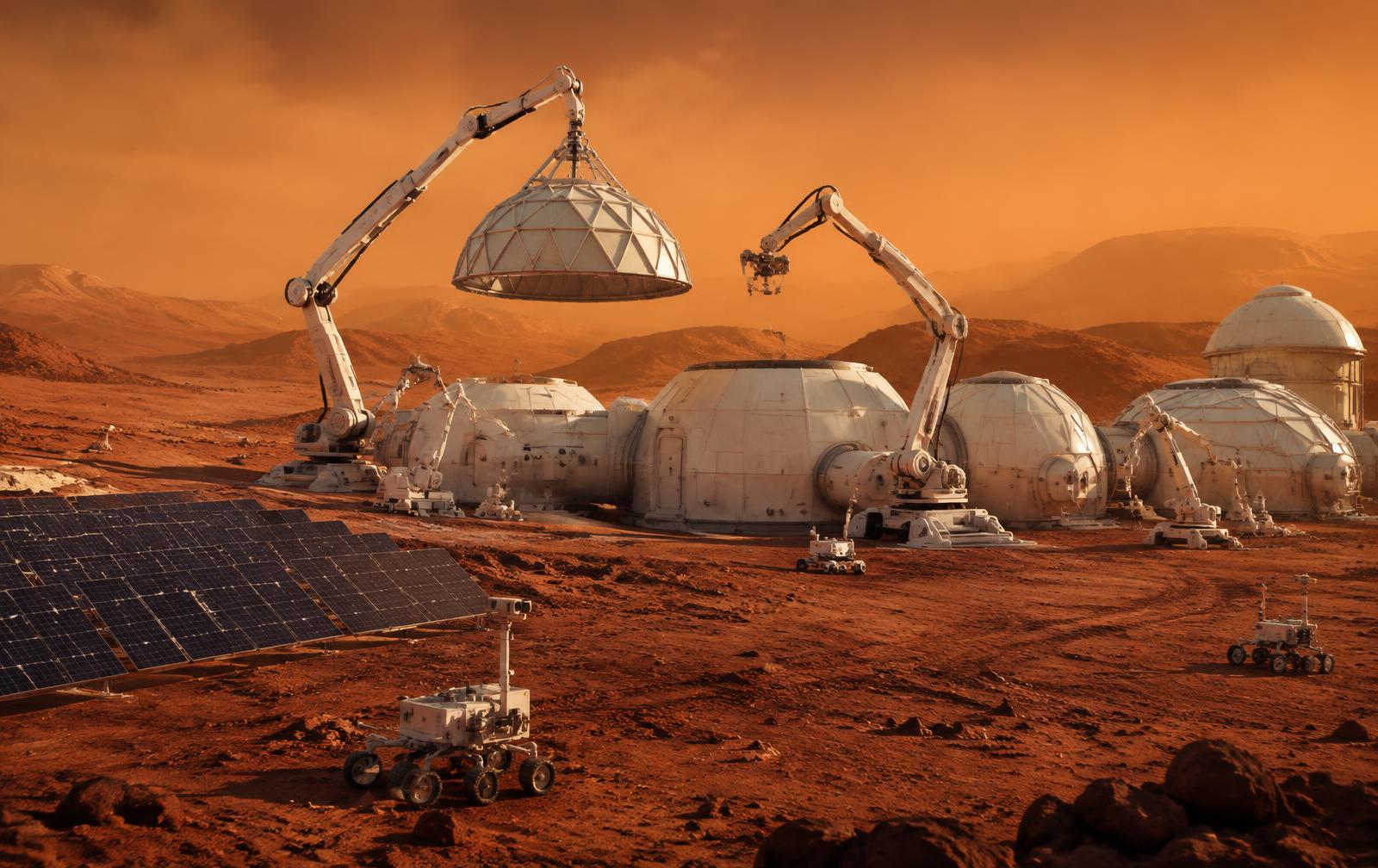
A habitat has to be built and running before anyone can live in it. MARSBOTS fleets assemble structures, connect power and life-support systems, and keep the habitat maintained and verified so it is ready the moment a crewed mission arrives.
Autonomous assembly
Robot teams unload, position and connect prefabricated habitat modules, power units and airlocks, sequencing the build so structural, power and life-support systems come online together.
Detect
Structural sensors and inspection robots continuously check seals, pressure integrity, power draw and thermal performance, flagging deviations before they become failures.
Sustain
Maintenance robots service solar arrays, batteries, ISRU units and life-support hardware, replacing components and clearing dust so systems keep running between crew visits.
Readiness verification
Before a crewed mission is cleared to land, the habitat's full systems are exercised and verified end to end, with results reported back to Earth for sign-off.
Handover to crew
Once the first crew arrives, the same robot fleet shifts from independent operation to supporting the crew directly: cargo handling, external inspection and continued construction.