
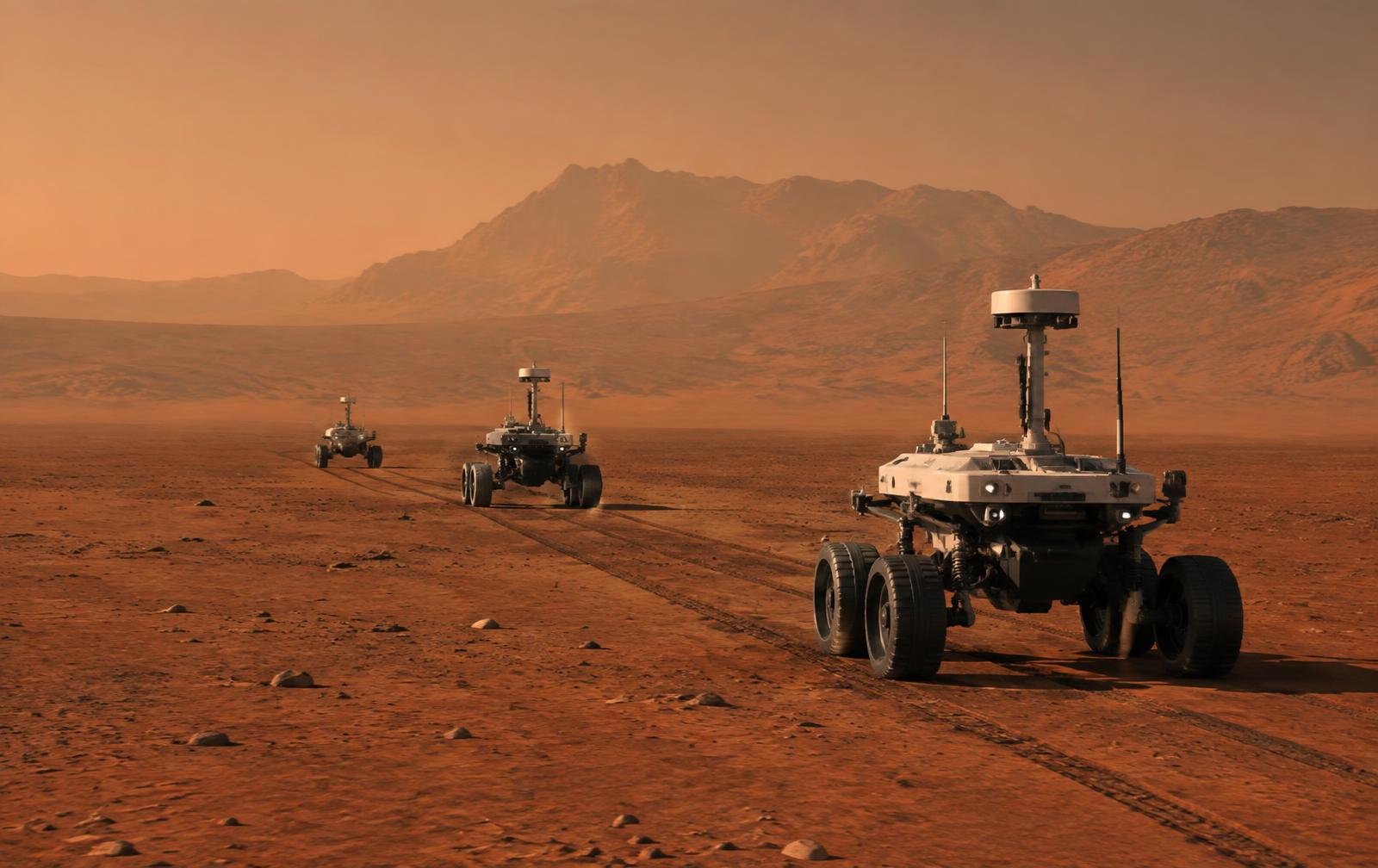
The surface is where exploration happens: rovers and robot swarms drive, map, sample and build across terrain no human has walked. MARSBOTS gives each unit the autonomy to navigate that terrain and the coordination to work as a fleet, under a comms delay that rules out constant remote control.
Terrain AI
Onboard vision and terrain models classify slope, rock hazards and soft ground in real time, so each rover picks a safe path without waiting for a command from Earth.
Detect
Cameras, lidar and ground-penetrating sensors build a live terrain map, flagging hazards such as loose regolith, hidden crevices and boulder fields before a unit commits to a route.
Build
Findings translate into action: paths are re-planned, sites are marked for excavation or drilling, and structural assembly sequences are staged for follow-up units in the fleet.
Fleet coordination
Multiple rovers share a common terrain map and divide exploration and construction tasks between them, so the fleet covers more ground and avoids duplicated work.
Why autonomy
With a 4 to 24 minute comms delay to Earth, a rover that waited for instructions before every move would be unusable. Onboard autonomy makes continuous exploration and construction possible.