
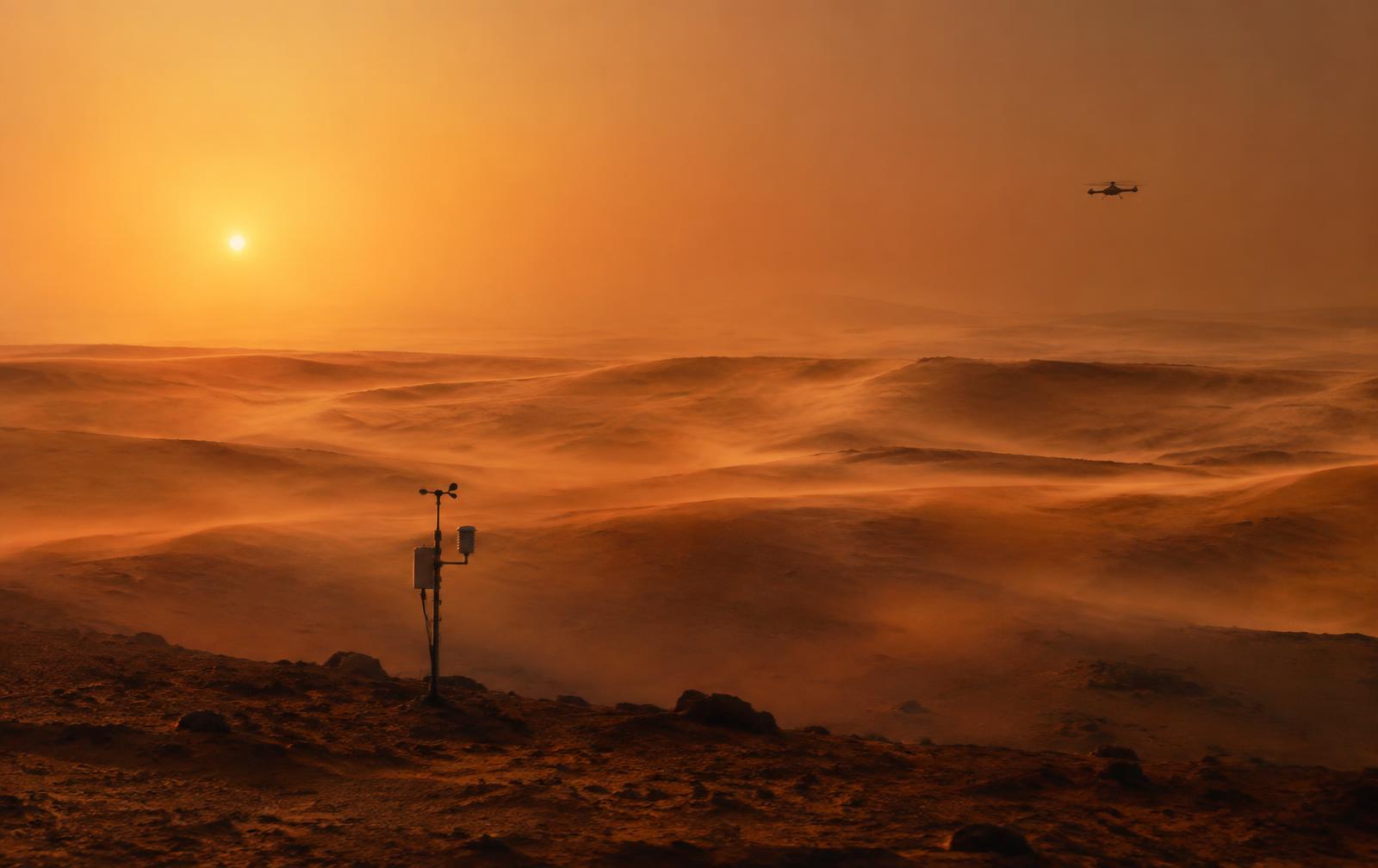
Mars's thin atmosphere still shapes every mission: dust storms cut solar power and visibility, wind loads stress structures, and radiation reaches the surface unfiltered. MARSBOTS reads the atmosphere continuously so fleets and habitats can act before conditions turn.
Dust and weather sensing
Surface and orbital sensors track optical depth, wind speed and temperature, feeding models that forecast local and regional dust storms days before they arrive.
Detect
Rising dust optical depth, sudden wind shifts and radiation spikes are flagged as they build, distinguishing local dust devils from the regional storms that can last for weeks.
Protect
Forecasts trigger concrete responses: rovers seek shelter or reduce activity, solar arrays reposition, and sensitive operations like drilling or sample handling are paused until conditions clear.
Radiation-hardened hardware
Electronics, sensors and actuators are shielded and rated for the radiation environment above the surface, so a routine exposure does not become a fleet-wide failure.
Mission planning input
Long-range dust and radiation forecasts feed directly into mission scheduling, so habitat assembly and crew-arrival windows are planned around known seasonal storm risk.